
Leaving EU Waters

Updated: Aug 16

For many yacht owners, cruising the Mediterranean means moving freely between some of the world’s most beautiful destinations. However, there often comes a point when owners ask an important question:
“Do I need to leave EU waters?”
The answer isn’t always straightforward.
Recently, I completed a voyage from Spain to Algeria and Tunisia, assisting with the yacht’s departure from the European Union and a definitive importation to change its registration to the Maltese flag. It reminded me that while leaving EU waters is a routine procedure for many yachts, there is still a great deal of confusion surrounding who needs to leave, why it’s necessary, and what the process actually involves.
In this article, I’ll explain the reasons behind leaving EU waters, which yachts are typically affected, and the most popular destinations beyond the EU.
Do All Yachts Need to Leave EU Waters?
Simply put, no.
Not every yacht cruising Europe is required to leave EU waters. Whether a yacht needs to exit depends on several factors, including:
The yacht’s flag state
Whether the yacht has EU VAT-paid status
The owner’s residency
The ownership structure
The customs regime under which the yacht is operating
Every yacht has its own legal and customs status, so it’s important not to assume that what applies to one vessel automatically applies to another.
Understanding Temporary Admission (TA)
One of the most common reasons yachts leave EU waters is because they are operating under Temporary Admission (TA).
Temporary Admission is a customs procedure that allows eligible non-EU flagged yachts, owned and used under specific conditions, to cruise within EU customs territory without paying EU import VAT for a limited period.
In most cases, eligible yachts may remain under Temporary Admission for up to 18 months. Before this period expires, the yacht will generally need to leave EU customs territory. This is why many owners plan a voyage to nearby non-EU destinations such as Tunisia, Algeria, Montenegro, Turkey, or Gibraltar as part of their cruising schedule.
It is important to remember that the 18-month period is not a simple rule that applies to every yacht. Eligibility depends on several factors, including the yacht’s flag, ownership structure, the owner’s residency, and how the yacht is being used. In certain circumstances, the Temporary Admission period may also be interrupted or affected by customs procedures.
Because customs regulations can change and every yacht’s circumstances are unique, owners should always seek professional advice or consult the relevant customs authorities before relying on Temporary Admission rules.
Temporary Admission at a Glance
Enter the EU under Temporary Admission
Cruise within the EU (up to 18 months, subject to eligibility and applicable rules)
Exit EU customs territory (e.g., Gibraltar, Tunisia, Algeria, Montenegro, Turkey)
Complete entry formalities in the non-EU country
Return to the EU when appropriate
Which Yachts Commonly Leave EU Waters?

The yachts most frequently leaving EU waters include:
Non-EU Flagged Private Yachts
Many private yachts registered outside the European Union cruise the Mediterranean under Temporary Admission. These yachts often leave the EU before the end of their Temporary Admission period.
Common registries include:
Cayman Islands
Marshall Islands
British Virgin Islands
Jersey
Guernsey
Isle of Man
Cook Islands
Yachts on Long Cruising Itineraries
Many yachts leave the EU simply because their voyage continues beyond Europe. In these cases, leaving EU waters is simply part of the owner’s cruising plans.
This may include passages towards:
Gibraltar
Morocco
Canary Islands
The Caribbean
The Middle East
Commercial and Charter Yachts
Commercial yachts may also leave EU waters depending on charter schedules, maintenance programs, or operational requirements.
Their customs and tax situation is often more complex and depends on their commercial status and flag administration.
Why Leave EU Waters?
While customs regulations are an important reason, they’re far from the only one.
Owners choose to cruise outside the European Union for many reasons, including:
Maintaining Temporary Admission status
Discovering new cruising destinations
Lower marina fees
Competitive fuel prices
Access to quality refit facilities
Winter storage
Less crowded cruising grounds
Although every yacht has its own operational needs, this article focuses primarily on yachts leaving EU waters to maintain their Temporary Admission (TA) status. In practice, many owners combine this administrative requirement with practical advantages that make the voyage even more worthwhile. Destinations such as Tunisia, Algeria, Turkey, Gibraltar, and Montenegro often offer significantly lower fuel prices than many EU ports, making bunkering a key part of the itinerary. At the same time, owners can take advantage of more competitive marina rates, carry out maintenance or refit work, provision the yacht, change crew, and enjoy new cruising grounds before returning to the European Union. With careful planning, what might initially seem like a customs obligation can become an efficient and enjoyable part of the yacht’s cruising season.
Should I Use a Local Agent?
One question I’m often asked is whether it’s worth using a local yacht agent when entering a non-EU country. My answer is simple: in most cases, yes.
While some destinations allow skippers to complete all formalities themselves, local procedures can vary from one port to another, and requirements may change over time. A reputable local agent understands the latest regulations, speaks the local language, and knows exactly which authorities need to be visited and in what order.
An experienced agent can assist with:
Customs and immigration formalities
Harbour and port authority procedures
Temporary berthing arrangements
Fuel and technical services
Crew changes
Local cruising permits where applicable
Communication with government authorities
The cost of an agent is often small compared with the time saved and the peace of mind gained, particularly for larger yachts, first-time visits, or owners operating on a tight schedule.
During my recent visits to Algeria and Tunisia, working with local professionals helped make the arrival process much smoother. Good preparation combined with reliable local support can significantly reduce delays and allow owners and crew to focus on enjoying the voyage rather than navigating administrative procedures.
Another advantage of working with a local agent is their understanding of local customs and etiquette. In some countries, hospitality and small gestures of appreciation are part of the local culture. For example, during visits to Algeria, it is not uncommon for agents to suggest bringing modest gifts from your home country, such as quality coffee, chocolates, toiletries, or other locally appreciated products, as a friendly gesture when meeting people involved in your visit. These are cultural courtesies rather than formal requirements, and a good local agent can advise you on what is appropriate, if anything, before you depart.
Popular Non-EU Destinations

Tunisia
Tunisia is one of the Mediterranean’s most popular destinations for yachts leaving EU waters.
Located just a short distance from Malta and Sicily, it offers modern marinas, experienced marina staff, good technical support, and straightforward arrival procedures.
I recently completed clearance into Tunisia and found the process to be efficient, provided all documentation had been prepared beforehand.
Algeria
Algeria remains one of the Mediterranean’s hidden gems.
Although the clearance process can be more detailed than in some neighbouring countries, the experience is rewarding. The coastline is largely untouched by mass tourism, the ports are authentic, and the hospitality is exceptional.
With proper planning and organised documentation, arriving in Algeria can be a unique and memorable experience.
Montenegro
For yachts cruising the Adriatic, Montenegro has become an increasingly popular destination.
Its world-class marinas, excellent refit facilities, and spectacular coastline make it an attractive option for owners wishing to spend time outside EU customs territory while enjoying first-class yachting infrastructure.
Thanks to its strategic location, Montenegro is also an easy and practical addition to an itinerary that includes Croatia, Greece, or Italy, allowing owners to combine compliance with Temporary Admission requirements with an unforgettable Adriatic cruising experience.
Turkey
Turkey offers one of the Mediterranean’s most extensive cruising areas.
With hundreds of beautiful anchorages, high-quality marinas, competitive maintenance costs, and excellent shipyards, it has become a favourite destination for both private and commercial yachts.
Many owners also choose Turkey for winter storage and refit projects.
Gibraltar
Although many yachts stop in Gibraltar for duty-free fuel, it is much more than just a fuel stop.
Its strategic location at the entrance to the Mediterranean makes it a convenient port for Atlantic crossings, crew changes, technical services, and provisioning before longer passages.
Morocco
Morocco has become increasingly popular with yachts heading into the Atlantic.
Ports such as Tangier provide excellent facilities while offering owners the opportunity to experience a completely different culture just a short distance from Southern Europe.
Preparing for Departure
Before leaving EU waters, it’s important to ensure that your paperwork is in order.
A few essential items include:
Valid passports for everyone onboard
Updated crew list
Original yacht registration documents
Insurance covering your destination
Clearance procedures completed at your final EU port
Confirmation of entry requirements for your destination country
Taking the time to prepare these documents before departure can save significant time during arrival formalities.
My Recent Experience
During a recent voyage, I had the opportunity to assist with a yacht’s departure from Spain before clearing into Algeria.
Although each country follows its own procedures, one thing became very clear:
Preparation is everything.
Having all certificates organised, printed copies readily available, and communicating with the destination marina and agents before arrival made the entire process considerably smoother.
It was also a reminder that some of the Mediterranean’s most rewarding cruising experiences lie beyond the familiar EU destinations.
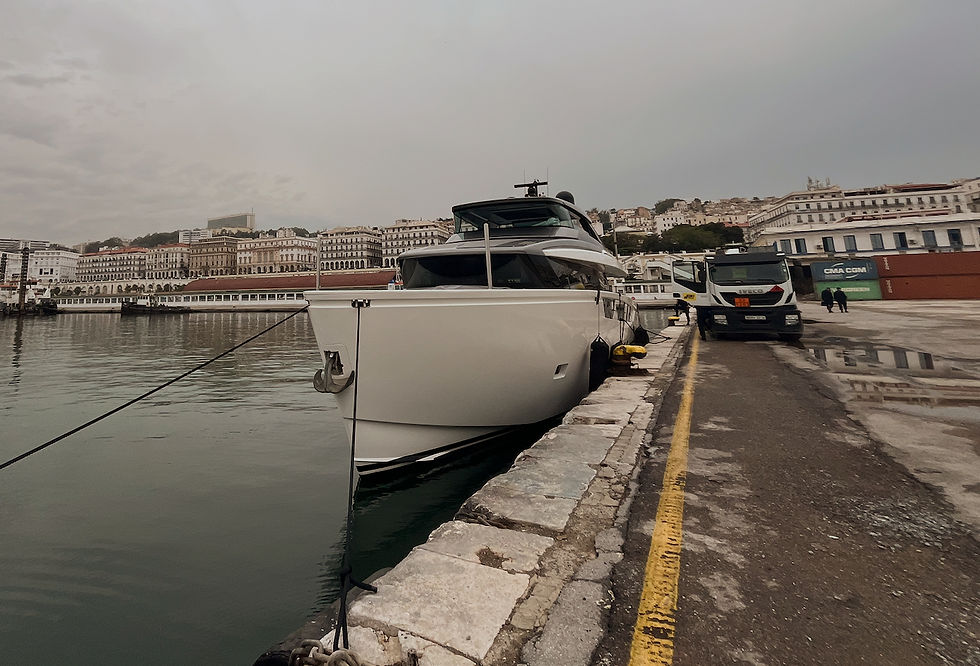
One of the yachts recently delivered by Treasure Yachts to Algeria, combining departure from EU customs territory with bunkering before continuing her Mediterranean itinerary.
Final Thoughts
Leaving EU waters is not something every yacht must do, but for many owners it becomes an important part of their cruising plans. Whether driven by Temporary Admission requirements, seasonal cruising, refit plans, or simply the desire to discover new destinations, careful preparation makes the process straightforward and enjoyable. From the modern marinas of Tunisia and Montenegro to the authentic ports of Algeria, the extensive coastline of Turkey, and the strategic gateway of Gibraltar, countless opportunities are waiting beyond EU waters.
If you’re planning a voyage outside the European Union and would like assistance with passage planning, yacht consulting, project management, or freelance captain services, Treasure Yachts is here to help you prepare for a smooth and successful journey.


Comments